
The paperwork a house cleaning business needs before the first client
Last updated: 2026-10-21
Short answer: Walk through the home before you quote, put the agreement, checklists and key policy in writing, then invoice and ask for feedback after the first few cleans.
Most new cleaners sort out their paperwork after the first client cancels at the door, a vase breaks, or a key goes missing. Setting it up first takes one evening. This guide walks through what to have ready, in the order you will use it, and how to write the three policies clients ask about most.
1. Before you quote: the walkthrough
A price given over the phone is a guess. Visit the home, or ask for a short video call, and write down what you see: bedrooms, bathrooms, floors, pets, how the client wants you to get in, and anything they want skipped or done first. A short intake form keeps you from forgetting a question while you are standing in someone's kitchen, and it gives you a record to check when the client says "you never mentioned the oven".
Note each room's condition too (light, average or heavy): a first clean after months without one takes far longer than the regular visits, and the client should know that before you start.
2. The written estimate
Put the price in writing, with what it includes. A useful trick is to offer three options instead of one: a basic clean, a deeper clean, and a deep clean with add-ons such as inside the oven and fridge. Clients then choose between your options instead of deciding yes or no, and many pick the middle one. Write down how long the price is valid and what could change it, such as a much messier home than the walkthrough showed.
3. The service agreement, and the three policies to decide first
A service agreement is where you write down what happens when things don't go to plan. You don't need legal language; you need clear answers that you have decided before a client asks.
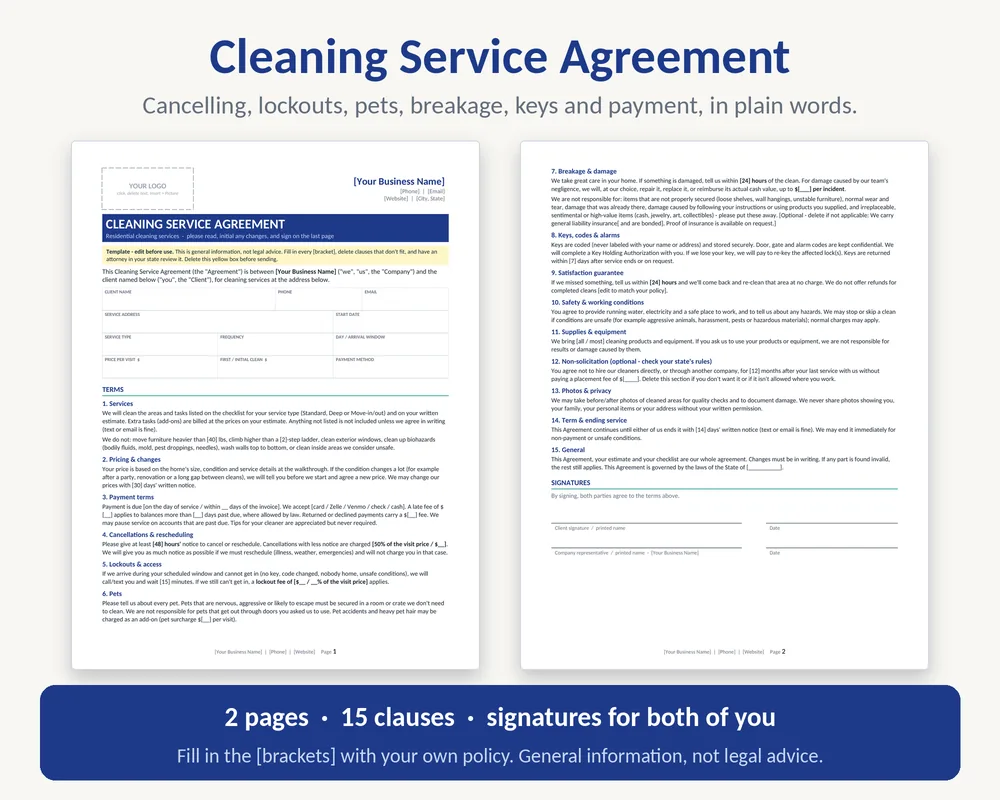
How to write your cancellation, lockout and breakage policies:
- Cancellations. Pick a notice period you can live with. Many cleaners use 24 or 48 hours, because a same-day gap in the schedule is usually lost income. Decide what a late cancellation costs: a flat fee or a share of the visit price. Then decide when you will waive it (illness, emergencies), and say that you will give the same notice if you have to reschedule.
- Lockouts. Say how long you will wait if nobody answers or the code has changed (15 minutes is common), that you will call or text during that time, and what the lockout fee is if you still can't get in. A lockout costs you the same drive and the same empty slot as a cancellation.
- Breakage and damage. Ask clients to tell you within a set time (for example 24 hours). Say what you will do when your team caused the damage: repair, replace or pay its actual value, up to a limit you choose. List what you are not responsible for, such as items that were not secured, damage that was already there, and valuables that should be put away. Only mention insurance or bonding if you actually have it.
Write each answer in one or two plain sentences and read them aloud as the client would. Rules on late fees, contracts and non-solicitation clauses differ from place to place, so have a local lawyer look over your final version; this guide is general information, not legal advice.
4. On the day: checklists and a job sheet
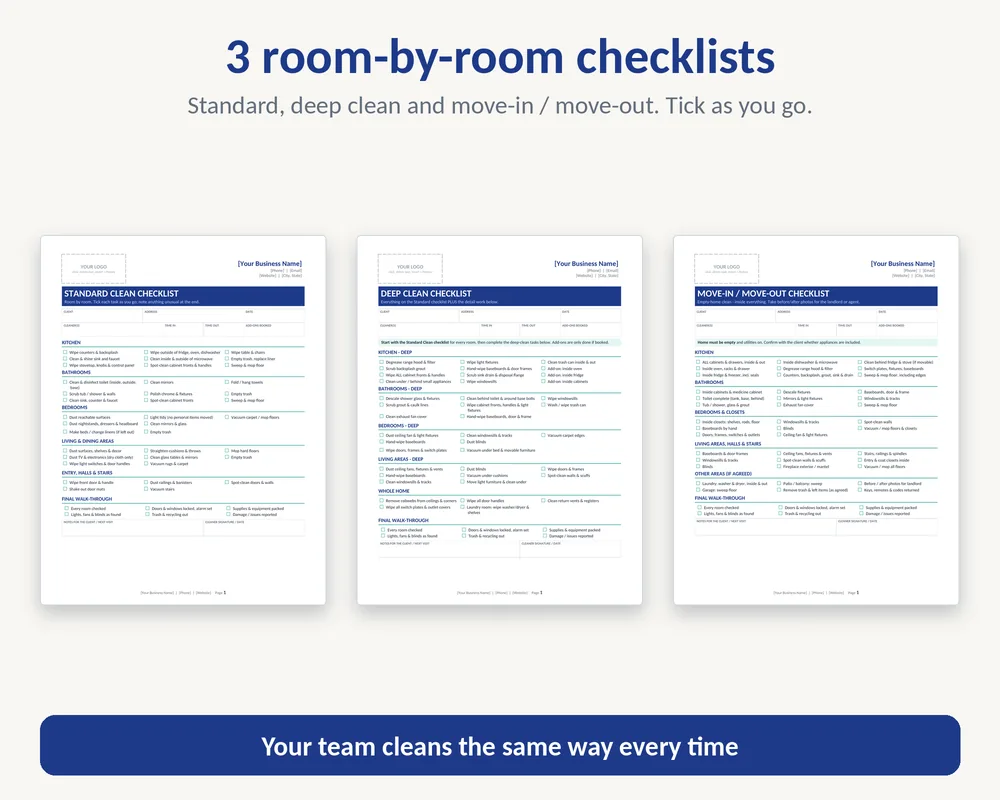
A room-by-room checklist means every clean is done the same way, whoever does it. It is also your answer when a client asks what a "deep clean" includes. Keep separate lists for regular cleans, deep cleans and move-in or move-out cleans of empty homes, and tick each task as you go.
If you work with a helper or a team, a daily job sheet records the stops, arrival and finish times, keys used and anything that went wrong. At the end of the day it tells you who worked how long, and whether every key came back.
5. Keys, incidents and getting paid
If a client gives you a key or a door code, put it in writing: what you may use it for, how you label and store keys (with a code, never the client's name or address), and how they get them back. If something breaks or someone gets hurt, write it down the same day with the facts and photos, and tell the client right away. A report written on the day beats a memory a week later.
Finally, send an invoice that lists the date, the service and any add-ons, and how to pay. Give a receipt when you are paid in cash or by cheque. After the first few cleans, leave a feedback card and a thank-you card with a referral offer: happy clients are how most cleaning businesses find their next ones.
Ready-made forms
Our Cleaning Business Forms Pack has all thirteen as editable Word and Google Docs files: the agreement, intake and walkthrough, three checklists, estimate, invoice, receipts, key holding authorization, incident report, feedback and referral cards, and a daily job sheet. Add your logo and business name once and they are yours.
Free tool: what to charge
Not sure what to put on the estimate? The free house cleaning price calculator suggests a price from the bedrooms, bathrooms, square feet, clean type and condition you noted at the walkthrough, and checks it against your break-even cost. It runs in your browser, with no sign-up.
Want the ready-made version? The template in this guide is a digital download.
Get the template on EtsyGeneral information only. It is not legal, tax or accounting advice; check the official source for your area or ask a professional.