
What to put in a home daycare enrollment packet
Last updated: 2026-10-21
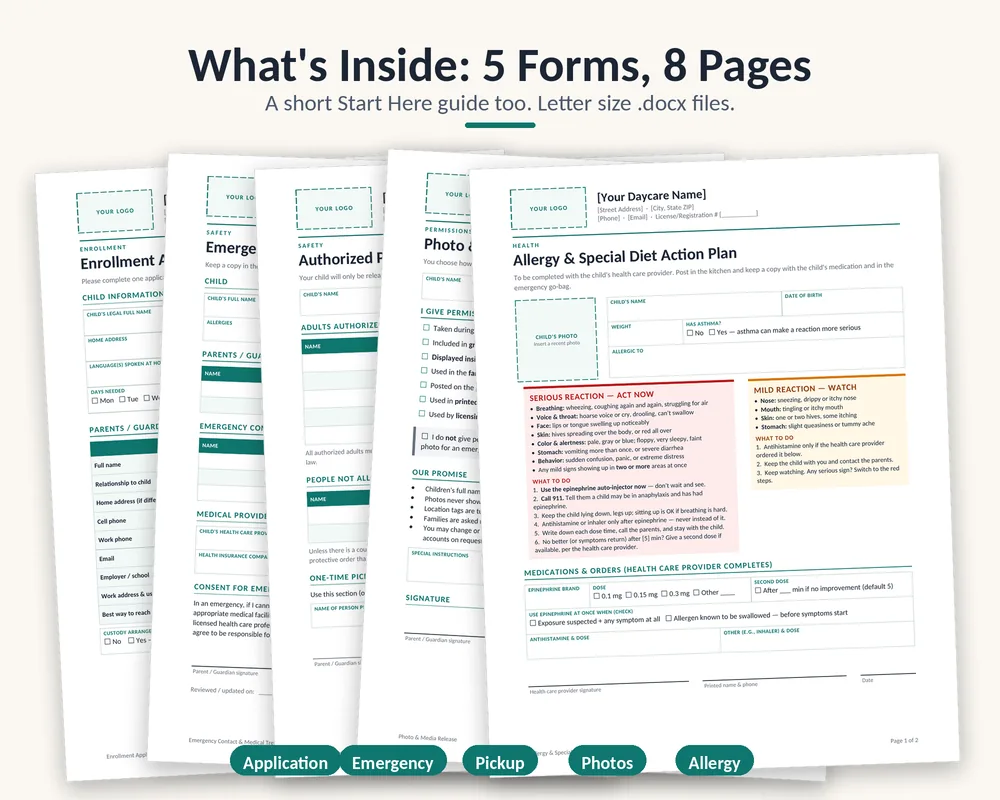
Short answer: Start with five forms: the application, emergency contacts, authorized pickup, health and allergy information and a photo release. Send them as one packet and ask for them back before the first day.
A new family is excited, you have a space, and the first day is two weeks away. The paperwork you collect now is what you will reach for on the day a child has a fever, a stranger turns up at pickup, or a parent asks why their child's photo is on your Facebook page. Getting it right once saves you from chasing it later.
This guide walks through what a home daycare or family child care enrollment packet usually holds, how to send it, and what to do with it when it comes back. It is general information: your state, province or territory may require specific forms or fields, so check your licensing rules first and add what they ask for.
The five forms most providers start with
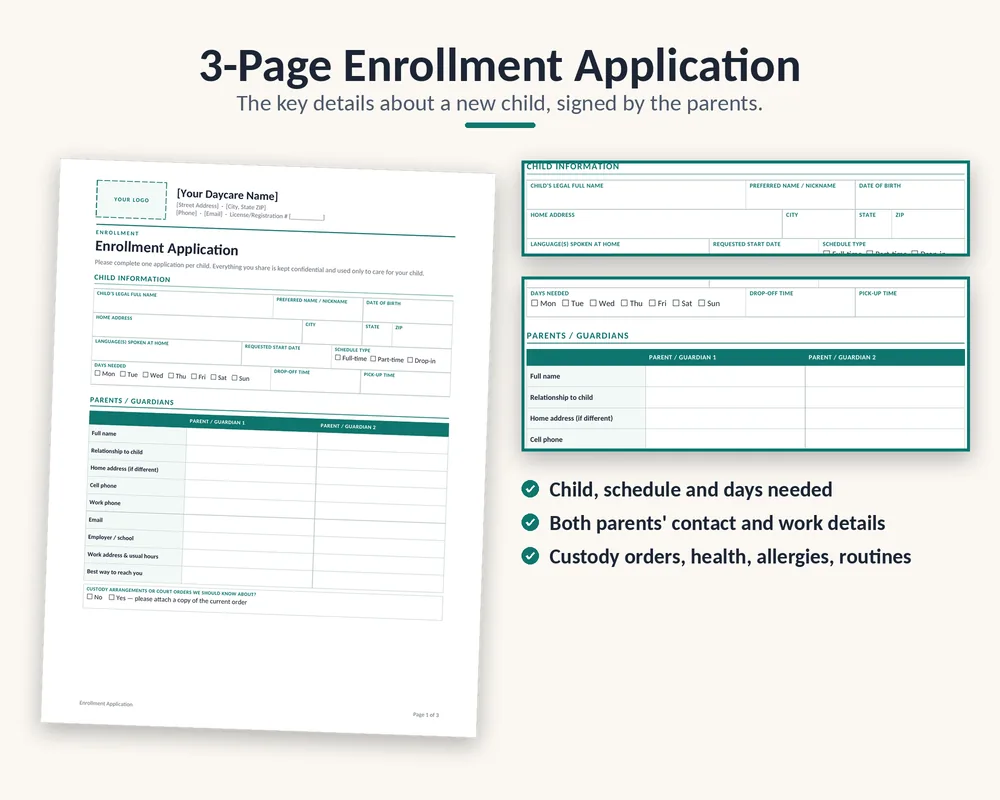
1. Enrollment application. The family's details in one place: the child's legal name, date of birth and schedule, both parents' contact and work details, emergency contacts, health information (doctor, allergies, medications, immunizations) and the things that help you on day one, like nap routines, foods the child loves and how they show they are upset. Ask about custody orders here, and ask for a copy if there is one.
2. Emergency contact and medical release. A one-page sheet you can grab in an emergency. It repeats the key contacts and health details and carries the parent's signed consent for emergency treatment if they cannot be reached. Keep a copy in your emergency go-bag, not only in the child's file.
3. Authorized pickup. Who may collect the child, who may not, and how you will check ID for someone you don't know. A one-time pickup section covers the grandparent who comes on a Thursday.
4. Photo and media release. Families tick each use they agree to: private photos to them, group photos to other families, your newsletter, your website or social media. Asking per use is clearer than a single yes or no, and families can change their answer later in writing.
5. Allergy and special diet action plan. Only for a child with an allergy or special diet. It is filled in with the child's health care provider, who completes the medication orders, and it says what a serious and a mild reaction look like and what to do.
How to send the packet
- Make it yours once. Open each form, use Find & Replace to put your business name everywhere at once, fill in your address, phone and license or registration line, and add your logo to the box at the top. Then read each form for anything else in [BRACKETS], such as the minimum pickup age and, in the US edition, your state, and check the application's line about a registration fee against your own policy. Save these as your masters.
- Decide paper or screen. Many families are happy to type into the files and email them back as PDFs; others prefer paper. Both work. If you email, send the forms as attachments, not as editable shared links, so one family never sees another family's answers.
- Send it with a date. Ask for everything back by a set day before the start date, and say that the child starts once the forms are in. A clear date helps families get them back in time.
- Go through it together. At your first meeting or on the first morning, read the application with the parents. You will catch the allergy they forgot to write down and the uncle who is "fine to pick up, but not on weekends".
- Check the signatures. Every form that needs a signature has a line for it. Check every required signature, including the emergency medical release.
What to do when it comes back
- File it. One folder per child, paper or digital. Keep it locked or password-protected: it holds health information and custody details.
- Copy the emergency pages. The emergency contact sheet and any allergy plan go into your go-bag and, for allergies, wherever the child's medicine is kept.
- Tell your helpers. Anyone who works with you needs to know the pickup list and any allergy before they are alone with the children.
- Set a review date. Ask families to update the forms when anything changes, and check them yourself at least once a year. The emergency contact sheet has a line for each review.
A note on rules
Licensing offices differ. Some want their own forms, some require particular fields (immunization records, a physician's signature, a specific consent wording), and some only ask that you keep the information. Use these templates as a starting point and change any field to match your rules.
Get the forms
The five forms above, in US and Canadian editions, editable in Word or Google Docs, are in Daycare Enrollment Forms (US and Canada) on Etsy.
Free tools for home daycares
More free tools for home daycares, including a time-space percentage calculator for US taxes and a year-end statement generator for parents, are on the free tools page.
Want the ready-made version? The template in this guide is a digital download.
Get the template on EtsyRelated guides
General information only. It is not legal, tax or accounting advice; check the official source for your area or ask a professional.